

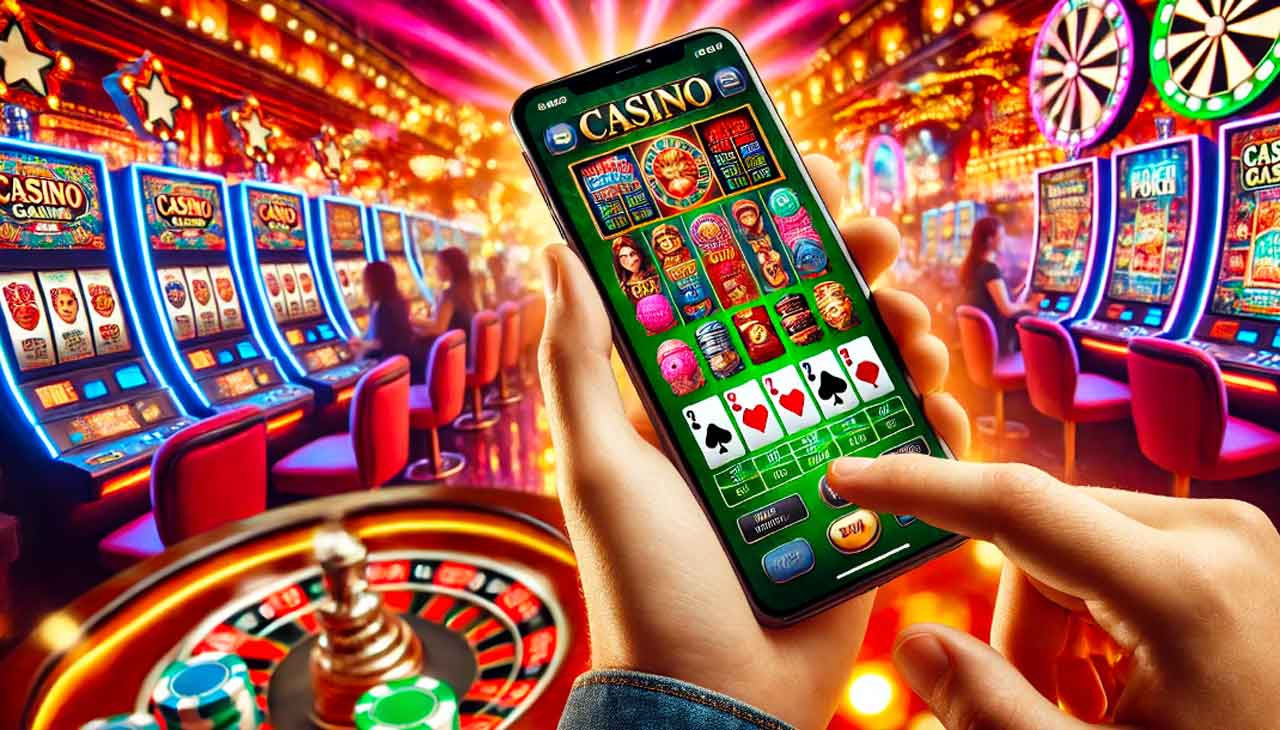
The transition of casino games from physical venues to digital screens altered the gambling landscape permanently. However, a secondary and equally profound shift occurred over the last two decades as desktop computing gave way to mobile dominance. In the early days of online gaming, playing digital slots required a stationary desktop computer, a stable wired internet connection, and dedicated software downloads. These technological barriers restricted play to specific spaces and scheduled times.
Today, mobile optimization has eliminated those boundaries entirely. The evolution of mobile architecture has changed not only where individuals access slot games, but also how software developers engineer them, how gaming platforms reward users, and how players interact with the underlying mechanics. Analyzing the details of this transition provides a clear view into the highly optimized framework of modern portable gaming.
The Shift from Flash to HTML5 Architecture
The bedrock of the mobile slot revolution is a deep technological transition in software engineering. During the early era of online casinos, slot titles were primarily built using Adobe Flash. While Flash enabled intricate animations and sound integration on desktop browsers, it was notoriously unsuited for mobile hardware. It consumed massive battery power, lacked native security features, and was completely unsupported by major mobile operating systems.
The emergence of HTML5 technology completely salvaged mobile compatibility. HTML5 serves as a universal coding standard that executes directly within any modern mobile web browser without requiring third-party plugins or external applications.
This structural standard introduced responsive design to the iGaming world. A slot game built with HTML5 autonomously detects the specific screen dimensions, resolution capacity, and aspect ratio of the connected device. Whether a user initializes the game on a standard desktop monitor, a large tablet, or a compact smartphone, the graphics scale dynamically, the navigation menus reposition automatically, and the touch interfaces recalibrate seamlessly to deliver an uncompromised experience.
Structural Innovations in Mobile Game Design
As smartphones became the primary gateway for digital slots, game studios realized that simply shrinking a desktop layout down to fit a five-inch display was insufficient. True mobile optimization demanded a complete overhaul of interface ergonomics and visual assets.
1. The Proliferation of Portrait Mode Orientation
Historically, slot machines were presented in wide landscape orientations to mirror the expansive console glass found in brick-and-mortar establishments. However, observational research indicates that smartphone consumers prefer holding their devices vertically with a single hand during casual interactions.
Modern game design heavily reflects this reality. Leading developers now prioritize portrait mode deployment, completely restructuring the visual hierarchy. The reels occupy the center third of the vertical space, the paytable info moves into collapsible swipe menus, and the interactive spin trigger is redesigned as a large thumb-accessible button located at the bottom of the screen.
2. Streamlined Controls and Gesture Integration
Mobile optimization stripped away the cluttered dashboard interfaces common in older desktop variants. Mechanical coin selectors, multi-button bet grids, and dense line selectors have been condensed into clean drop-down menus.
-
Tap-and-Hold Triggers: Holding the central spin button activates lightning-fast autospin configurations instantly.
-
Swipe-to-Spin Functionality: Users can swipe down directly across the active reels to initiate a spin, mimicking the tactile pull of traditional physical lever arms.
-
Haptic Feedback Response: Subtle vibration pulses emit during scatter landings or bonus triggers to substitute for loud external audio tracks in public settings.
Changing Behavioral Patterns and Micro-Session Play
Beyond visual adjustments, mobile optimization fundamentally reorganized consumer behavior and the psychological cadence of digital slot interaction. On a desktop computer, a slot session is typically an intentional, extended event lasting an hour or more. Mobile access converted this model into a series of scattered micro-sessions throughout the day.
Because a slot machine now sits in a pocket, it serves as a filler tool for brief moments of downtime. Individuals engage with digital slots while waiting in queues, sitting on public transit, or relaxing during brief vocational breaks.
To cater to these brief engagements, software studios engineered faster game engine loops. Modern slots incorporate turbo modes that reduce reel rotation duration from five seconds down to less than one second. The presentation of bonus mechanics, victory animations, and payout rollups has been heavily accelerated to ensure that even a three-minute play session provides a complete, satisfying gameplay cycle.
Technological Advancements in Connectivity and Security
The operational reliability of mobile slot platforms depends entirely on underlying infrastructure upgrades that protect data and maintain performance during transit.
The transition from older telecommunication networks to advanced high-speed mobile data connections dramatically minimized latency issues. High bandwidth allows for real-time asset streaming, enabling high-definition visual elements and orchestral soundscapes to download instantaneously without exhausting device storage limits.
Simultaneously, mobile operating systems facilitated unprecedented advancements in account security. The integration of native biometric authentication protocols, including fingerprint scanning and facial recognition systems, allows players to complete secure platform sign-ins and authorize financial transactions instantaneously. This setup entirely bypasses the friction of entering long alphanumeric passwords on small keypads, creating a highly secure environment that remains remarkably accessible to the user.
The Convergence of Apps and Mobile Browser Environments
The contemporary mobile slot landscape features a strategic balance between native application ecosystems and universal mobile browser access.
Native apps, downloaded directly through official application marketplaces, provide maximum hardware optimization, capitalizing on the specific graphic processing units of the device for unmatched frame rates. They also enable the utilization of localized push notifications to inform players of tailored promotional opportunities or tournament updates.
Concurrently, instant-play browser platforms ensure complete accessibility across alternate operating configurations without requiring active installation space. This dual-track approach ensures that no matter how an individual prefers to interact with technology, the entry pathway to modern slot platforms remains completely frictionless.
Frequently Asked Questions
Does playing a slot machine on a mobile phone lower the theoretical Return to Player percentage compared to a desktop version?
No, the theoretical Return to Player percentage remains absolutely identical across all device formats. The core mathematical calculations and random number generations are handled by the remote host server, not the local hardware. The mobile device functions strictly as a graphical display terminal, ensuring the payouts align precisely with regulated standards regardless of screen size.
How do modern mobile slots protect a session if a voice call interrupts active gameplay?
The host server tracks the state of every spin independently. If a phone call or system notification interrupts your session mid-spin, the server completes the calculation in the background. Once you return to the game application, the system will replay the visual outcome or display a summary statement detailing the accurate ledger update.
Are mobile web browser slots safer to use than downloaded casino applications?
Both environments utilize the same high-grade encryption systems, provided you are accessing a fully licensed and certified casino platform. Browser slots rely on modern web security layers to shield data transmission, while official store apps undergo rigorous security vetting before distribution, making both pathways highly secure for standard transactions.
Why do some older slot titles seem unavailable on modern smartphone casino applications?
Many legacy games created prior to the mobile transition were coded exclusively using outdated software languages like Flash. If a developer determines that a title lacks sufficient long-term demand to justify the financial cost of recoding the entire engine into modern code, the game is permanently retired from the mobile catalog.
How much cellular data does an average mobile slot game consume during standard play?
Modern HTML5 slots are highly optimized for data efficiency, typically consuming between ten and thirty megabytes of data per hour of continuous execution. The initial launch phase requires the most bandwidth as graphical assets load into the device cache, while subsequent spins transmit minimal alphanumeric data to process outcomes.
Can I utilize the exact same payment systems on my smartphone that I use on a computer?
Yes, mobile platforms provide comprehensive payment integration, frequently adding mobile-specific options like digital wallets and direct device billing. These integrations permit secure financial authentication directly through your phone fingerprint or facial scanning modules, facilitating significantly faster processing than standard desktop entry methods.