
Poker is often romanticized as a game of math, probability, and strategic card play. While understanding pot odds, equity, and range construction is vital, these technical skills only represent half of the equation. The true battleground of high-stakes poker is the human mind. When the pressure mounts, the stacks get deep, and the variance swings wildly, emotional control separates the elite players from the perpetual break-even grinders.
Mastering the mental game requires an understanding of psychology, neurobiology, and emotional regulation. In a game where you can make the perfect decision and still lose everything on a bad river card, staying calm under pressure is the ultimate competitive advantage.
The Anatomy of Tilt and Pressure
To defeat emotional instability at the poker table, you must first understand what causes it. In poker terminology, any departure from optimal strategy due to emotional distress is known as tilt. While most players associate tilt with anger after a bad beat, it can manifest as fear, overconfidence, impatience, or boredom.
When you experience a massive loss or face a high-pressure decision for your entire stack, your brain perceives this financial threat similarly to a physical threat. The amygdala, the brain’s emotional radar, triggers a fight-or-flight response. Cortisol and adrenaline flood your system, causing your heart rate to spike and your palms to sweat.
The primary casualty of this biological reaction is the prefrontal cortex, the region of the brain responsible for logical reasoning, risk assessment, and long-term planning. When the amygdala hijacks your brain, you lose the ability to calculate odds objectively, leading to impulsive, emotionally driven decisions.
Strategies for Maintaining Emotional Equilibrium
Remaining stoic when the stakes are high is not an innate trait; it is a skill developed through deliberate practice and psychological conditioning. Elite players utilize specific frameworks to keep their minds sharp and their emotions level.
1. Embracing a Process-Oriented Mindset
The foundational pillar of mental toughness in poker is separating execution from results. In most endeavors, a good result implies a good decision, and a bad result implies a mistake. Poker subverts this logic entirely. You can play a hand flawlessly and lose, or play it terribly and win.
To maintain calm, you must train your brain to value the quality of the decision over the outcome of the hand. If you correctly deduce that your opponent is bluffing and call with the best hand, you have won the mental game, regardless of whether they hit their two-outer on the river. Celebrate the correct decision, accept the variance, and move on to the next hand.
2. Tactical Breathing and Physiological Reset
When you feel the physical sensations of pressure rising, you must intercept the biological feedback loop. If your body tells your brain it is under attack, your thinking will remain compromised.
-
The Box Breathing Technique: Inhale through your nose for a count of four, hold your breath for a count of four, exhale slowly through your mouth for a count of four, and hold empty for a count of four.
-
The Physiological Sigh: Take two quick inhalations through the nose, followed by one long, extended exhalation through the mouth.
These breathing patterns stimulate the vagus nerve, triggering the parasympathetic nervous system to slow your heart rate and lower your blood pressure. This physical reset signals to your brain that you are safe, allowing the prefrontal cortex to regain control.
3. Logic Injections
When emotional thoughts begin to creep in, combat them with objective, pre-determined statements. Jared Tendler, a renowned poker mental game coach, advocates for using logic injections to disrupt the onset of tilt. Write down phrases that ground you in reality and review them during moments of stress. Examples include:
-
Variance is the price I pay to play a game where bad players can win in the short term.
-
I cannot control the cards that hit the felt; I can only control my reaction to them.
-
Losing this pot does not define my skill level or my worth as a player.
Developing Long-Term Psychological Resilience
Staying calm in a single high-pressure moment is valuable, but enduring a prolonged downswing requires structural mental resilience. This is built away from the tables through lifestyle choices and cognitive conditioning.
Bankroll Management as a Shield
No amount of psychological training can save you if you are playing with money you cannot afford to lose. If losing a buy-in impacts your ability to pay rent or maintain your lifestyle, you are playing under financial duress.
Proper bankroll management acts as an emotional shield. When you have one hundred buy-ins for a specific stake, losing two or three buy-ins in a single session feels like a minor statistical fluctuation rather than a financial catastrophe. Fearless poker requires financial insulation.
Desensitization Through Volume
The first time you play a pot worth thousands of dollars, your adrenaline will skyrocket. The five-hundredth time you play a pot of that size, it becomes routine. Exposure therapy is a powerful tool in poker. By consistently playing volume and exposing yourself to high-pressure scenarios, you desensitize your nervous system to the stakes. The situation loses its novelty, and as a result, loses its power to disrupt your emotional balance.
Recognizing the Subtle Forms of Tilt
While aggressive, angry tilt is easy to spot, successful players must also guard against insidious, quiet forms of emotional degradation.
Injustice Tilt
This occurs when a player believes the universe is actively working against them. They feel they are running worse than anyone else in history. This victim mentality leads to passive play, as the player assumes they will lose the hand anyway, causing them to miss profitable betting opportunities.
Entitlement Tilt
Common among experienced players, entitlement tilt stems from the belief that because you are the better player, you deserve to win the pot. When a recreational player makes a mathematically incorrect call and catches a lucky card, the entitled player becomes furious. Recognizing that poker owes you nothing is the only cure for entitlement.
Mistake Tilt
Frustration directed at yourself rather than the cards or your opponents. If you make a genuine strategic error that costs you chips, the anger over that mistake can cloud your judgment for subsequent hands, causing a cascading effect of poor decisions. Accept that mistakes are data points for future improvement, not indictments of your intelligence.
The Power of the Present Moment
Ultimately, the mental game of poker boils down to mindfulness. A poker session is a series of independent events. The past is gone, and the chips lost in the last hand cannot be retrieved by emotional wishing. The future is uncertain. The only thing that matters is the current hand, the current stack sizes, and the current action. By anchoring your awareness firmly in the present moment, you strip away the anxiety of the past and the future, leaving only clean, logical execution.
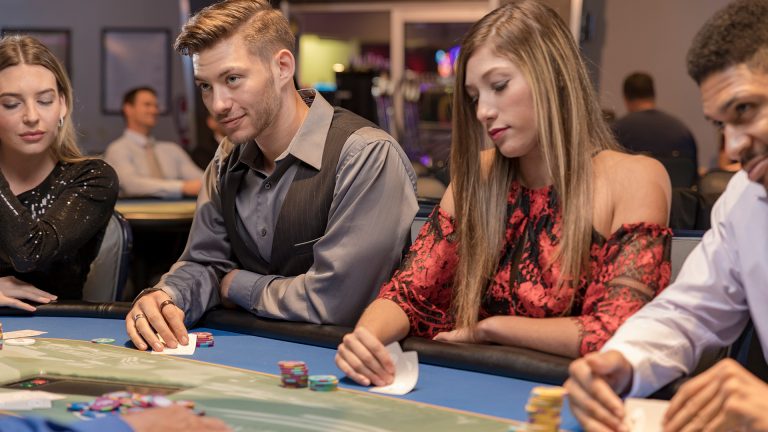
Visualization of Table Focus
Below is a conceptual representation of the intense focus and isolation required to maintain calm at a crowded, high-pressure poker table.
Frequently Asked Questions
What is the difference between hot tilt and cold tilt?
Hot tilt is characterized by outward anger, aggression, and frustration. A player on hot tilt will play too many hands, bluff off their chips light, and bet aggressively out of spite. Cold tilt is passive and quiet. A player on cold tilt is usually driven by fear or lack of confidence, causing them to check-fold too often, avoid marginal situations, and play overly tight to protect their remaining chips.
How do I know when it is time to quit a session due to mental fatigue?
You should quit a session when you notice you are no longer making proactive strategic decisions. Signs of mental fatigue include checking your phone frequently, automatically clicking buttons without calculating player ranges, feeling a sense of dread when entering a pot, or realizing you are playing hands simply out of boredom.
Can meditation really improve my performance at the poker table?
Yes. Meditation trains the brain to observe thoughts and emotions without immediately reacting to them. By practicing mindfulness, you create a space between the stimulus (a bad beat) and your response. This allows you to recognize the initial spark of anger or anxiety and defuse it before it translates into a poor strategic decision at the table.
How should I handle an opponent who is actively trying to provoke me verbally?
The best response to verbal provocation is complete emotional neutrality. Understand that their words are a tactical attempt to trigger your amygdala and force you into making mistakes. By refusing to engage, staying silent, and focusing entirely on the mathematical and strategic variables of the game, you render their strategy useless and often cause them to tilt out of frustration.
Is it normal to feel a racing heartbeat during a massive bluff?
Yes, it is a completely natural physiological response to a high-risk situation. The goal is not to eliminate the adrenaline rush entirely, but to manage it so it does not alter your physical behavior or cloud your thinking. Using deep, controlled breathing helps mask physical tells and keeps your mind clear while the adrenaline passes through your system.
How long does it take to recover from a severe emotional downswing?
Recovery time varies depending on the individual and the severity of the financial or emotional hit. Some players can reset after a good night’s sleep, while others may need a week or more away from the game. The key is to not return to the tables until you can review your past losing hands objectively without feeling a twinge of resentment or anxiety.