

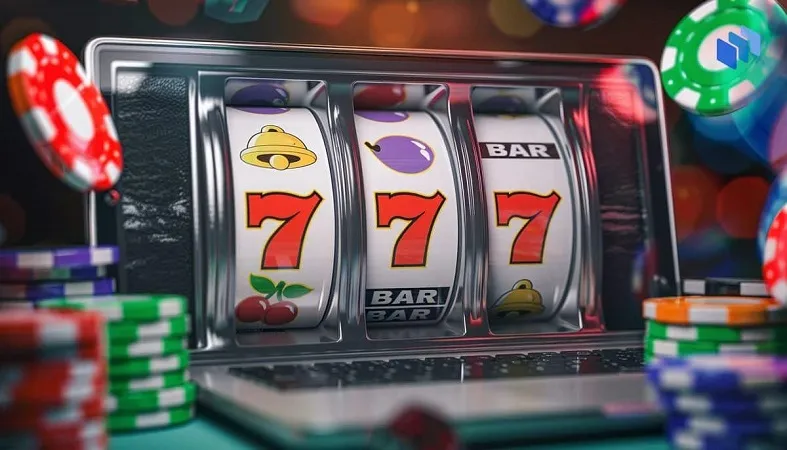
Modern slot machines have evolved significantly from the classic three-reel mechanical devices of the past. Today digital casino gaming platforms feature intricate narratives, immersive visual design, and highly complex algorithmic frameworks. While base gameplay provides a steady flow of minor payouts, the real mathematical and financial potential of modern slots is concentrated within free spins and specialized bonus rounds.
Understanding the underlying mechanics of these special features allows players to make informed strategic decisions. While slot outcomes are ultimately determined by automated randomness, implementing systematic bankroll management and analyzing structural game profiles can vastly optimize the value extracted from these premium game states.
Deconstructing the Mechanics of Bonus Features
To maximize the value of slot bonus features, one must first demystify the technology that governs them. Every modern online and video slot relies on a core engine known as a Random Number Generator. This software algorithm continuously produces complex mathematical sequences at a rate of thousands of numbers per second. When you click the spin trigger, the system captures the exact digit generated at that millisecond to dictate where the reels align.
This means that entering a free spins mode or a pick-and-win bonus is not dependent on a specific sequence of prior spins. There is no such thing as a slot machine that is due to hit a bonus. The probability of triggering a feature remains completely identical on every single individual spin.
However, once you cross the threshold into a bonus round, the rules of the game structurally shift. The slot software frequently alters its reel parameters or introduces specific mechanics that are mathematically unavailable during base gameplay. These adjustments include increasing the density of high-value symbols, activating wild card variations, or introducing exponential win multipliers. Understanding these internal shifts is essential for measuring the true value of a specific game.
The Strategic Importance of Return to Player and Volatility
When selecting titles with the explicit goal of optimizing bonus play, two core technical metrics require careful evaluation: Return to Player percentage and volatility.
Return to Player represents the long-term, theoretical percentage of total wagered money that a specific slot machine is programmed to pay back to consumers over millions of simulated spins. For instance, a title featuring a ninety-six percent Return to Player will theoretically retain four dollars out of every one hundred dollars wagered over an infinite timeline. When maximizing bonus potential, you should exclusively target titles that sit at or above the ninety-six percent benchmark.
Volatility, sometimes referred to as variance, describes the operational risk profile of the game. It dictates both the frequency and the scale of the payouts.
-
High-Volatility Slots: These titles rarely award minor payouts during standard play. Instead, the mathematical model concentrates the vast majority of its theoretical payout capacity inside the bonus rounds. Triggers are infrequent, but when a bonus round activates, it carries the potential for massive exponential returns.
-
Low-Volatility Slots: These titles offer frequent, low-value payouts during base play. Their bonus rounds are triggered regularly but typically yield modest rewards, serving to extend your playing time rather than deliver single monumental wins.
If your primary objective is to capture highly explosive bonus outcomes, high-volatility environments are mathematically required. However, navigating these games demands a larger bankroll buffer to withstand long dry spells between feature triggers.
Analyzing the Value Proposition of the Feature Buy Option
A significant innovation in modern digital slot design is the introduction of the direct feature buy mechanism. This function allows players to completely bypass base gameplay by paying a fixed lump sum, typically ranging from fifty times to over one hundred times the current base wager, to instantly trigger the main bonus round.
From an analytical standpoint, utilizing the feature buy requires extreme caution. While it completely eliminates the tedious process of waiting for organic scatter symbols, it concentrates a massive portion of your bankroll into a single high-pressure event.
Operators frequently adjust the Return to Player metrics slightly upward when a user selects a direct feature buy, sometimes increasing the theoretical payout by a fraction of a percent. Despite this slight mathematical enhancement, the real-world variance remains exceptionally high. If you choose to utilize feature buys, your baseline unit size must be adjusted downward accordingly. If your standard total session budget is two hundred dollars, purchasing a one hundred dollar direct bonus round leaves you dangerously exposed to immediate ruin if that single feature yields a poor return.
Best Practices for Optimizing Practical Feature Outcomes
Maximizing slot bonuses requires establishing strict operational parameters before the game interface is initialized.
1. Adjusting Bet Sizes to Match Trigger Probability
Statistical data indicates that a typical high-volatility slot requires an average of one hundred and fifty to two hundred and fifty standard spins to organically trigger a primary free spins round. To ensure your bankroll survives long enough to encounter a feature state, your individual spin wager should never exceed one percent of your absolute session capital. Maintaining a small unit size guarantees you can endure the standard mathematical variance required to reach the high-paying bonus loops.
2. Comprehensive Review of Promotional Terms
When utilizing free spins awarded directly through casino marketing promotions rather than organic gameplay, the absolute value is heavily governed by the fine print.
-
Wagering Requirements: This metric dictates how many times you must playthrough the total winnings generated from your free spins before the capital converts into cold withdrawable funds. A low wagering requirement drastically increases your probability of walking away with real profit.
-
Maximum Cashout Limits: Many promotional spin packages feature a hard ceiling on total extractable winnings. Understanding this limit prevents you from wasting high-volatility gameplay strategies on a promotion that legally caps your net financial return.
3. Progressive Multiplier Tracking
When selecting which slots to play, look for titles that incorporate progressive win multipliers during their free spins phases. In these configurations, each consecutive win or cascading reel drop elevates a persistent multiplier value that remains active for the remainder of the round. This mechanic creates a compounding effect, making wins achieved near the conclusion of the free spins sequence exponentially more valuable than those at the beginning.
Frequently Asked Questions
Does altering the coin denomination size during regular play change the statistical probability of triggering a bonus?
No, changing your coin denomination or total wager size has zero impact on the mathematical probability of triggering a bonus round. The Random Number Generator treats every single spin as a totally independent event, completely uninfluenced by the amount of money being risked. The only variance is the scale of the potential payout, as bonus rewards are calculated as direct multiples of the activating wager.
What happens to a running slot bonus round if the internet connection drops mid-game?
All modern digital slot servers are engineered with absolute state persistence. If your localized internet connection fails while a free spins sequence or interactive pick-and-win bonus is active, the remote gaming server continues to execute the random generations in the background. Once you re-establish your connection and reload the application, the system will either resume the visual presentation or credit the final accumulated winnings directly to your main account balance.
Why do some slots offer a choice between different free spin configurations?
Many developers include choice menus to allow players to customize the volatility of their bonus round. For example, a slot might offer a choice between twenty free spins with a flat two times multiplier, or five free spins with a ten times multiplier. The lower spin option with the higher multiplier represents a high-volatility configuration, yielding massive risk but superior top-end payout potential.
Are the pick-and-win bonus screens truly random, or is the prize predetermined?
In the vast majority of modern regulated slots, the total prize calculation is determined by the Random Number Generator the exact millisecond the bonus round is triggered. The interactive choice segments where you click on chests, maps, or items are structural visual wrappers designed for engagement. The actual mathematical financial outcome has already been calculated and allocated by the host server.
What is a cascading or tumbling reel mechanic, and how does it optimize free spins?
A cascading reel mechanic removes all winning symbols from the game board after a successful spin, allowing new symbols to fall from above into the empty spaces. During a free spins round, this feature enables a single spin allocation to trigger multiple consecutive wins. When combined with a progressive multiplier, tumbling reels provide the highest potential for massive structural payouts.
Is it mathematically safer to play slots with simple bonus mechanics over complex multi-level rounds?
Simple mechanics are not inherently safer; safety is entirely dictated by the Return to Player percentage and the baseline volatility profile. A complex multi-level bonus round can feature the exact same theoretical long-term payout model as a basic three-reel wild feature. The complexity simply alters the visual storytelling and how the payouts are distributed throughout the internal code loops.